Pivot door or concealed-hinge door: which suits your entrance?
A clear comparison of pivot and concealed-hinge doors: how they open, sizes, space needed, look and cost — and when to choose each for your villa entrance.
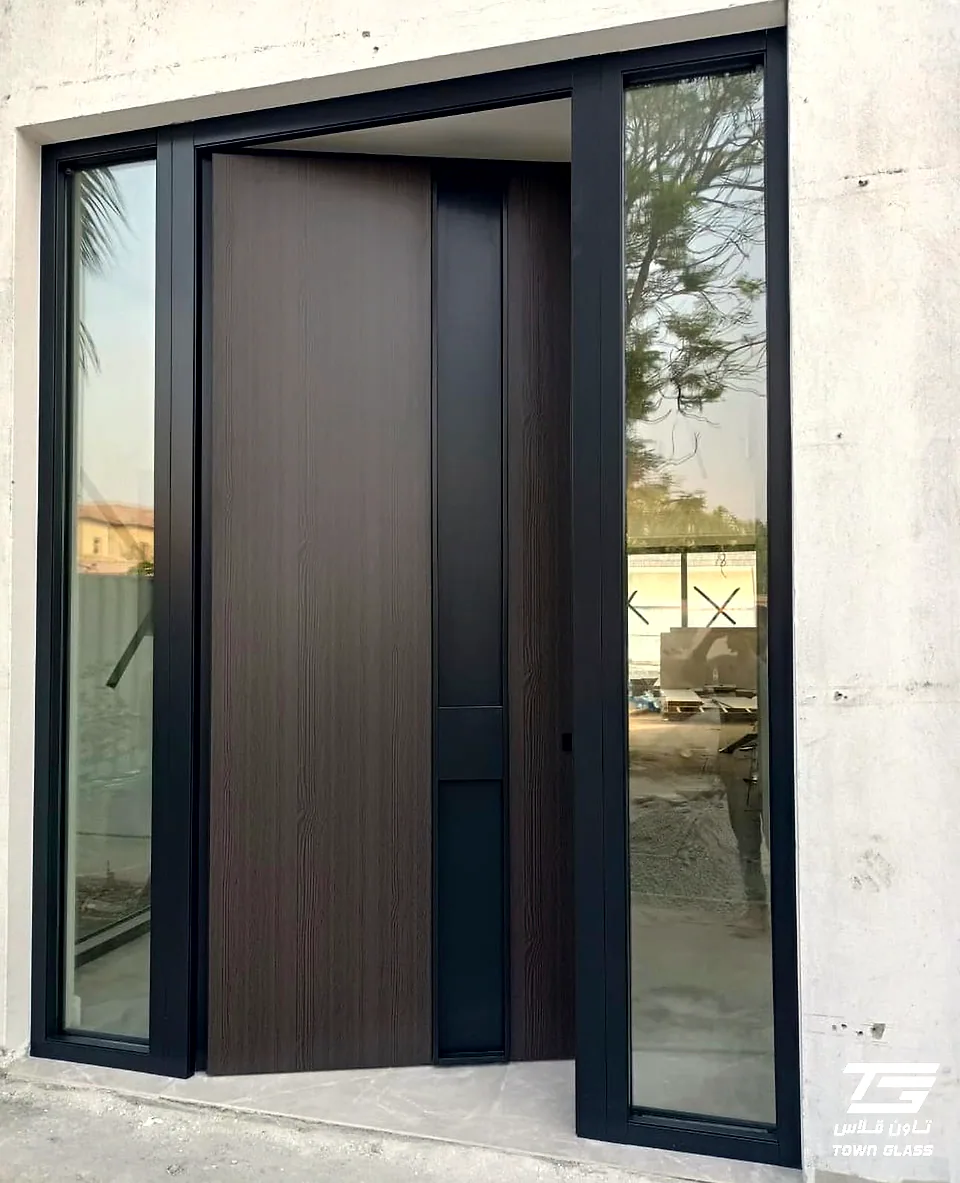
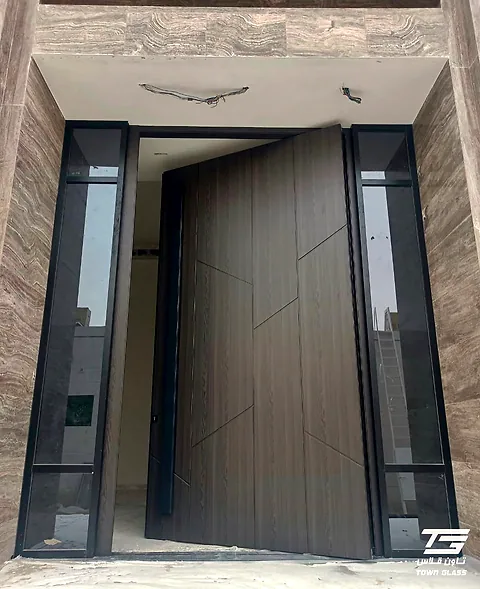
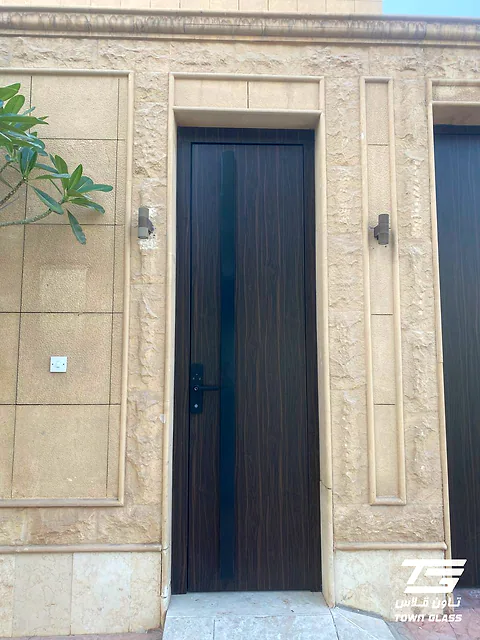
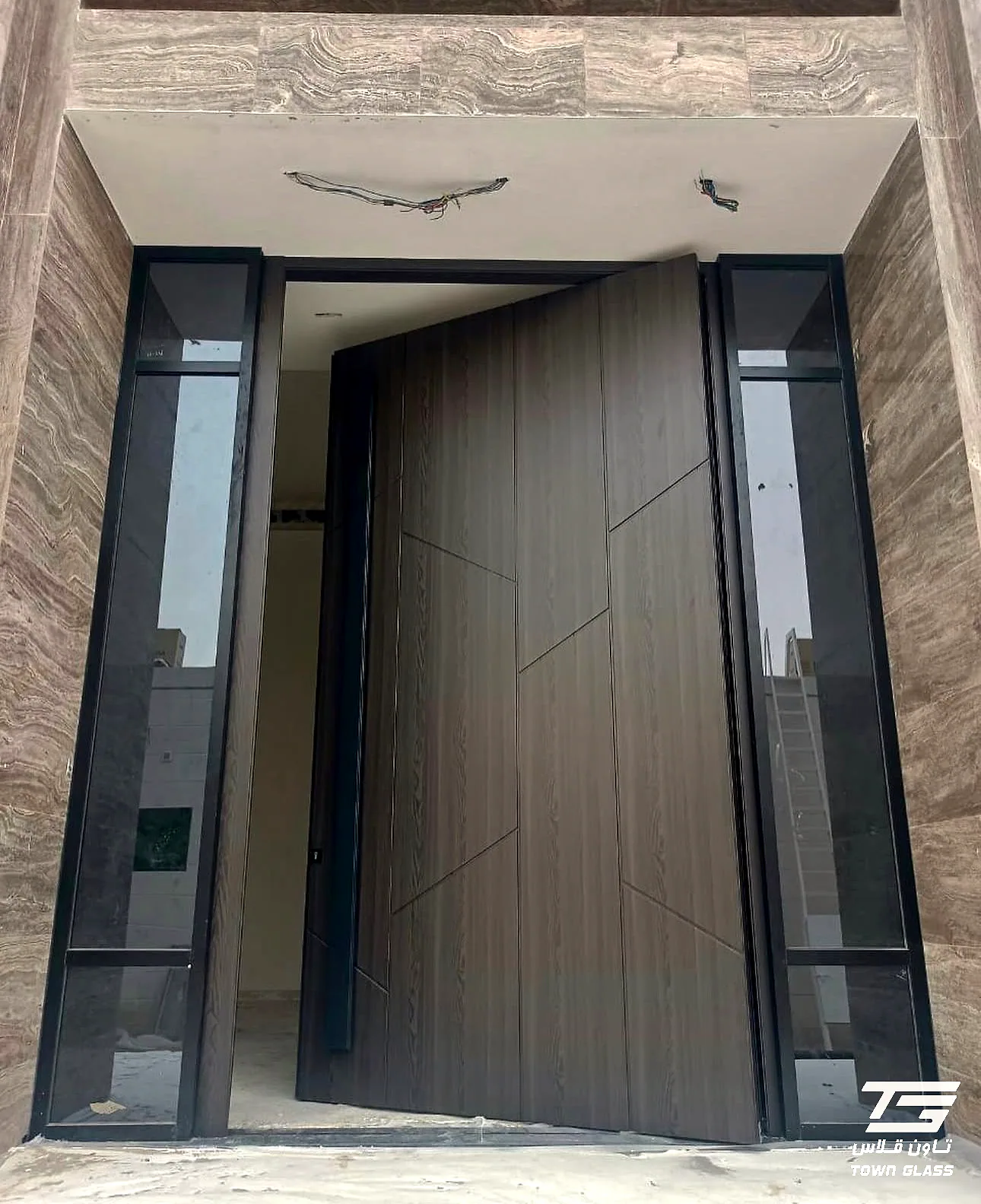
Both give an entrance a clean, modern look with no visible hinges, and we build both the same way, from aluminium, insulation and cladding. The difference is how they move — and that decides which suits your entrance.
| Pivot door | Concealed-hinge door | |
|---|---|---|
| How it opens | Turns on a top-and-bottom axis | Swings to one side like a traditional door |
| Sizes | Very large: ours go up to 8 m high and 1.8 m wide | Standard door sizes |
| Space needed | Part turns inward, part outward | Swing space on one side |
| Look | A grand, striking entrance | A clean, elegant look |
| Cost | Usually higher (pivot system and size) | Usually lower |
| Best for | Wide villa and palace entrances | Flats, offices, side doors and standard entrances |
Choose a pivot door if…
- Your entrance is tall or wide and you want one large leaf instead of two.
- You want the door to be the centrepiece of the facade.
- There is enough space in front of and behind it for the leaf to turn.
Choose concealed hinges if…
- The entrance is a standard width.
- Space behind or in front of the door is limited.
- You want a clean look for less, or side and interior doors that match the main entrance.
Not sure? Send us a photo of the entrance and rough sizes on WhatsApp, and we’ll recommend the right type after a survey.
Common questions
Is a pivot door more secure than a hinged door?
Security depends mostly on the lock and the frame’s strength rather than how the door opens. Neither type shows its hinges outside.
Can a large door use concealed hinges?
Within the leaf’s weight limits, yes — but for very large doors a pivot door is the better solution.